What Bowling Ball Weight Should You Use? A Simple, Proven Approach
Choosing the right bowling ball weight is one of the most overlooked decisions bowlers make. Some assume throwing the heaviest ball possible will automatically improve pin carry, while others drop weight hoping extra speed will lead to more strikes.
The truth is much simpler—and far more practical.
For most bowlers, the best bowling ball weight isn’t about brute force or raw speed. It’s about finding the heaviest ball you can throw comfortably, consistently, and confidently without sacrificing control, timing, or endurance.
The Simple Rule for Choosing Bowling Ball Weight
The best bowling ball weight is the heaviest ball you can throw repeatedly without losing control.
That means:
- You can swing it freely without muscling the ball
- Your timing stays intact late into a session
- You remain balanced at the foul line
- Your ball speed stays consistent from game one to game three
If a ball starts breaking down your mechanics or wearing you out, it’s no longer helping you—no matter how heavy it is.
General Bowling Ball Weight Guidelines (Not Rules)
As a starting point, most adult bowlers fall into these ranges:
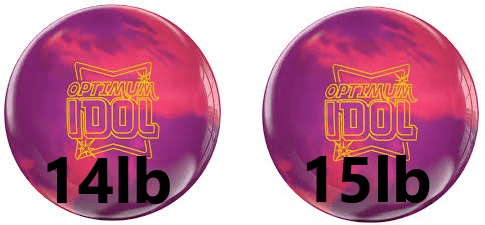
- Most adult men: 14–15 lb
- Most adult women: 12–13 lb
These are guidelines, not rules. Body size, strength, athletic background, age, and even injury history all matter. A 140-pound bowler and a 220-pound bowler may arrive at very different “ideal” ball weights, even if they have similar skill levels.
The goal is not to match someone else’s setup—it’s to support your game.
Why Heavier Isn’t Always Better
Yes, heavier bowling balls carry more mass, which can help reduce deflection through the pins. But that advantage only matters if the ball is delivered with good speed, balance, and repeatability.
When a ball is too heavy, bowlers often:
- Lose ball speed late in a set
- Pull shots inside or miss right due to fatigue
- Break down timing and release mechanics
- Struggle to repeat shots under pressure
Any theoretical benefit of extra weight disappears quickly when execution suffers. A slightly lighter ball thrown cleanly will almost always outperform a heavier ball you’re fighting.
Why Lighter Isn’t Automatically Better Either
Dropping ball weight can make it easier to throw the ball faster, but speed alone does not guarantee better pin carry.
When ball weight gets too low, bowlers may see:
- Increased deflection through the pocket
- Reduced continuation through the pins
- Less forgiveness on off-pocket hits
Modern lane conditions, pins, and bowling ball design are optimized around balls weighing 14 lb and up. Once you go significantly lighter than that, you often give up built-in carry potential—especially on less-than-perfect shots.
The Real Balance: Control, Speed, and Endurance
The “best” bowling ball weight is the one that allows you to:
- Maintain consistent speed across an entire session
- Repeat shots without muscling the swing
- Stay balanced and relaxed at the foul line
- Trust your release and timing under pressure
A bowler throwing a 14 lb ball cleanly and confidently will almost always outscore a bowler struggling to control a heavier ball—or spraying a much lighter one around the lane.
A Coach’s Perspective on Ball Weight
If you’re unsure about your bowling ball weight, this is one area where working with a knowledgeable coach or pro shop operator can make a big difference.
Watching how you move, how your speed holds up over time, and how your ball goes through the pins tells far more than numbers ever could.
The goal is not to maximize force on paper.
The goal is to maximize repeatable, controllable shots.
Choose the ball weight that supports your game—not one that forces you to fight it.
Final Takeaway: What Bowling Ball Weight Should You Use?
Choose the ball weight that allows you to bowl your best for an entire session, not just a few shots.
If you’re comfortable, balanced, and confident, you’re far more likely to score well than if you’re chasing weight, speed, or theory. When in doubt, consult a professional coach, test different weights if possible, and trust what you can repeat under pressure.
The right ball weight doesn’t make bowling harder.
It makes bowling simpler.