Introduction: The Straight-Bowler Dilemma
If you throw the ball straight and you’re shopping for a new bowling ball, you’ve probably heard the same advice over and over: “Just buy a plastic ball.” On the surface, that recommendation makes sense. Plastic doesn’t hook much, it’s predictable, and it’s usually the least expensive option, but what is the best bowling ball for straight bowlers?
For many straight bowlers, that’s where the conversation ends.
But here’s the dilemma — throwing the ball straight doesn’t automatically mean plastic is the best bowling ball for straight bowlers. Hook is only one piece of the puzzle, and it’s not the only factor that affects carry, pin action, or consistency.
The real question isn’t whether the ball hooks.
It’s whether hook is the only reason to use a bowling ball with a core in the first place.
That’s where things get more interesting.
The Default Recommendation: Plastic Bowling Balls
Plastic bowling balls are exactly what they sound like — a hard polyester shell with very little surface friction. They’re designed to skid easily through the oil and stay on a straight, predictable path from the foul line to the pins.
That’s why plastic balls are so commonly recommended for straight bowlers. If you’re not trying to hook the ball, it makes sense to use a ball that naturally resists hooking. Plastic simplifies lane play, minimizes unexpected movement, and makes it easier to aim straight at your target.
From a practical standpoint, plastic balls also check a lot of boxes:
- Minimal friction, so the ball doesn’t react much to lane conditions
- A very stable ball path, which helps with accuracy
- Low cost, making them accessible for new or casual bowlers
Because of all that, plastic often gets labeled as the best bowling ball for straight bowlers by default.
But while plastic does an excellent job controlling direction, direction alone isn’t the whole story when it comes to striking.
What Actually Creates Strike Carry (Not Just Hook)
A lot of bowling advice gets boiled down to a simple idea: more hook equals more strikes. While hook can help, that way of thinking skips over what really causes good pin carry.
Instead of focusing only on how much the ball hooks, it’s more useful to look at how the ball moves down the lane. Every bowling ball — whether it hooks a lot or barely at all — goes through the same three phases of motion:
- Skid: The ball slides through the front part of the lane
- Hook (or transition): The ball slows down and changes direction
- Roll: The ball is rolling end-over-end as it enters the pins
Here’s the key point: the roll phase at impact matters more than the amount of hook.
When a ball reaches the pins in a strong roll, it transfers energy more efficiently into the pin deck. That leads to better continuation, less deflection, and more pins staying low and mixing. Entry angle helps, but entry angle alone doesn’t guarantee good carry.
A ball that hooks a lot but is still skidding at impact can hit the pocket and leave weak corners. Meanwhile, a straighter shot that’s fully in the roll phase can drive through the pins and carry surprisingly well.
Strike carry isn’t just about angle — it’s about energy transfer at the moment of impact.
What a Core Does — Even If the Ball Doesn’t Hook Much
When people hear “bowling ball core,” they usually think it automatically means a big, sweeping hook. In reality, the core’s job isn’t just to make the ball hook — it’s to control how the ball rotates and how it uses its energy, and this definitely is the heart of the matter when we talk about the best bowling ball for straight bowlers.
At a basic level, the core influences three important things:
- Rotation: How long the ball maintains its axis as it travels down the lane
- Stability: How smoothly the ball responds as it slows down
- Transition into roll: How efficiently the ball moves from skid into a true roll
Even if the ball travels mostly straight, those factors still matter.
For straight bowlers, a ball with a real core can provide some key advantages:
- Less deflection off the head pin
- Stronger continuation through the 5-pin and into the back of the pin deck
- More consistent pin action, especially on pocket hits
This is why two shots that look almost identical going down the lane can produce very different results at the pins. One skids, deflects, and leaves corners. The other drives through the rack.
And this is important to clarify: using a ball with a core does not mean the ball will suddenly hook a ton. With the right core strength and coverstock, the ball can still appear straight while simply rolling more effectively when it matters most.
Why Plastic Balls Often Struggle With Carry
Plastic bowling balls are excellent at staying straight — sometimes too good at it. Because they create so little friction, plastic balls tend to stay in the skid phase longer than other ball types, even all the way to the pins.
When a ball is still skidding at impact, a few things usually happen:
- The ball deflects more off the head pin
- Energy doesn’t transfer as efficiently through the pin deck
- The ball struggles to continue through the pins
That’s why straight bowlers using plastic often see similar leave patterns, even on shots that look good:
- Weak 10-pins on solid pocket hits
- Buckets when the ball deflects early
- Light-hit washouts when the ball never really sets up
The important distinction here is that these leaves usually aren’t caused by poor accuracy. Many straight bowlers hit their target and the pocket consistently. The issue is that the ball simply never gets into a strong roll before impact.
Plastic isn’t failing because it won’t hook — it’s struggling because it’s still sliding when it needs to be rolling.
When Plastic Is the Right Choice
With all that said, plastic bowling balls aren’t “bad,” and they’re not a mistake by default. In the right situations, plastic is absolutely the right tool for the job.
Plastic is often the best choice for:
- New bowlers who are still learning basic timing and alignment
- Bowlers with inconsistent accuracy who benefit from a very stable ball path
- Players with very slow ball speed, where added friction might cause early, unpredictable reaction
- Budget-first decisions, especially for someone just getting into the game
In these cases, plastic helps simplify the game. It removes variables, keeps the ball predictable, and allows the bowler to focus on repeating shots rather than managing ball motion.
The key thing to understand is this: plastic has a specific purpose. It’s designed to control direction and minimize lane interaction. When that’s what a bowler needs most, plastic does its job very well.
Problems only arise when plastic is treated as a one-size-fits-all answer for every straight bowler — even those who are ready for more performance at the pins.
When a Ball With a Core Makes More Sense
Even if you throw straight, there are situations where a ball with a core can make a noticeable difference. For straight bowlers, a core ball is often a smart choice if you:
- Hit the pocket regularly and want more consistent strikes
- Want better carry through the pins without having to learn a hook yet
When shopping for a ball in this category, look for a combination of features that keeps the ball predictable while still improving pin action:
- Symmetric core – provides smooth rotation and balanced energy
- Low differential – keeps the ball from overreacting or hooking too much
- Mild coverstock – maintains control but still allows the ball to grip enough to roll
The beauty of a well-chosen core ball is that it can still look straight to the naked eye, even on the lane, but it performs very differently at the pins. That extra roll and energy transfer can make a big difference in carry, helping to convert weak leaves into strikes without changing your basic shot.
Some Viable Options of the Best Bowling Ball for Straight Bowlers
If you’re looking for a ball that works well with a straight shot while still helping with carry and pin action, here are a few solid options:
1. Hammer Raw Hybrid
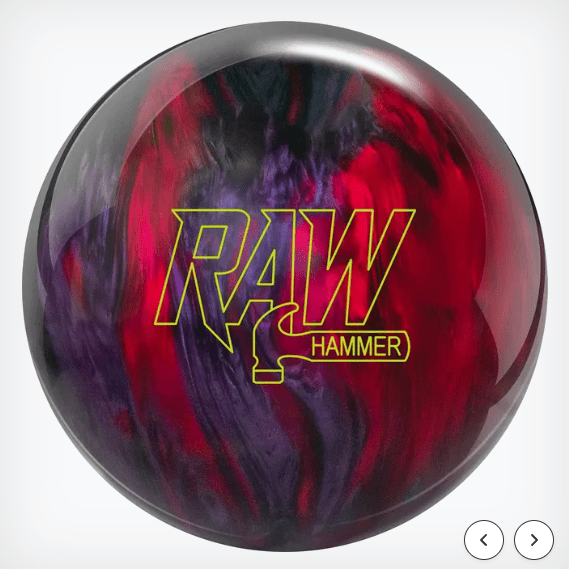
The Raw Hybrid combines a symmetric core with a medium-friction hybrid coverstock, giving straight bowlers a smooth, controlled roll. It’s stable enough to stay on line but has just enough backend traction to help with carry and reduce deflection through the pins.
Get it here: https://www.bowling.com/products/hammer-raw-hybrid-red-smoke-black.htm
2. Storm Tropical Surge
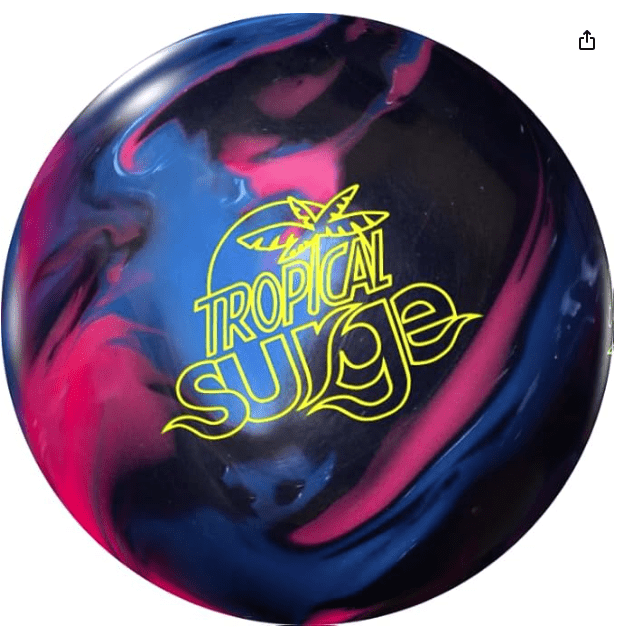
This ball features a low-differential core and a polished cover, which keeps it predictable while encouraging a clean roll into the pocket. Straight bowlers who want slightly more energy transfer without changing their release can get more consistent strikes with this one.
And it comes in a lot of different colors and you can order it on Amazon if you want. Link to it is HERE
3. MOTIV Max Thrill Solid
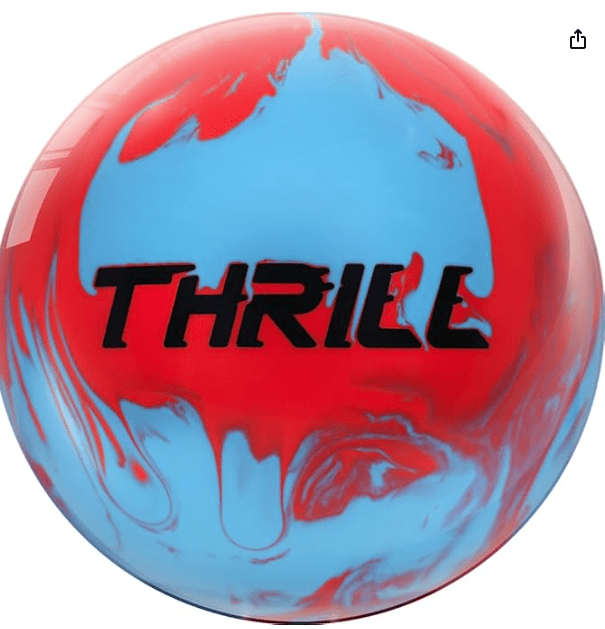
With a solid coverstock and moderate core flare, the Max Thrill Solid is designed for controlled motion and strong continuation through the pin deck. It’s ideal for straight shooters who want to maximize carry without trying to hook the ball aggressively.
This one is on Amazon too for easy ordering: Max Thrill Solid Bowling Ball
Key Takeaway: Control vs. Energy
At the end of the day, choosing the right bowling ball for a straight bowler isn’t just about hook — it’s about understanding what the ball is doing for you. Here’s the simple distinction:
- Plastic = direction control: It keeps the ball on a straight, predictable path and makes aiming easier.
- Core = energy management: It helps the ball transition into a strong roll, transfer energy efficiently, and carry through the pins.
The big lesson? You don’t need hook to strike. What matters most is that the ball is in the right phase at impact — rolling smoothly through the pins and maximizing carry. With the right ball, even a straight shot can strike consistently and convert those tough leaves.
Wrapping It Up: Choosing the Right Ball for Your Game
So, what’s the bottom line for straight bowlers? Plastic balls aren’t “bad,” and core balls aren’t just for hookers. The right choice comes down to what you need most on the lanes: direction control or energy transfer at the pins.
If you’re new, inconsistent, or on a budget, plastic is a safe, reliable choice. But if you’re hitting the pocket regularly and want better carry without learning a hook yet, a ball with a core can unlock more consistent pin action and stronger strikes — all while still looking straight down the lane.
Want to take your understanding further? Check out some of our other posts:
- Adjusting Your Spare Mindset: When Every Pin Counts – Learn how to think differently about spares
- The Bowling Focus Targeting System – see how to hit your target every time
- Choosing the Right Layout for Your Bowling Style – match your ball motion to your skill set
At the end of the day, strike carry isn’t just about hook. It’s about putting the ball in the right phase when it hits the pins — and picking a ball that helps you do exactly that.