Introduction: Entry Angle Is an Outcome, Not a Goal
When bowlers talk about carry, bowling entry angle almost always comes up. And almost just as often, it’s misunderstood.
If you’ve read my previous articles on where the ball exits the oil and bowling ball motion down lane, you already know that ball reaction is a sequence. Entry angle doesn’t exist on its own — it’s the result of everything that happens before the ball reaches the pocket.
That’s where most bowlers get tripped up.
Instead of building entry angle through proper timing and motion, they chase it. More hook, more rotation, sharper backend — anything that looks like it should create angle. Sometimes it works. Most of the time, it creates inconsistency.
Here’s the key idea to understand going forward:
Entry angle is created, not chased.
It comes from:
- Exiting the oil at the right place
- Transitioning from hook to roll at the right time
- Arriving at the pocket with energy still available
The common misconception is simple:
“If I want better carry, I just need more hook.”
In reality, more hook at the wrong time often makes entry angle worse — and turns good pocket hits into weak corners. This article will break down how entry angle actually happens, and why building it the right way leads to far more consistent carry.
What Entry Angle Actually Is
At its core, bowling entry angle is simple:
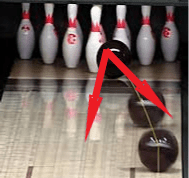
It’s the angle the ball enters the pocket relative to the headpin.
That’s it. It’s not how much the ball hooks, how far right it gets, or how impressive the backend looks. Entry angle is measured at the moment the ball contacts the pins.
Why Entry Angle Matters
Entry angle plays a direct role in:
- Pin carry
The correct angle allows the ball to drive through the 1–3 (or 1–2) and send pins across the deck. - Proper deflection
Too little deflection and the ball drives straight through. Too much and it glances off. Proper entry angle balances energy transfer. - Consistent pin action
Good entry angle keeps pins low and active, increasing strike percentage even on slight misses.
This is why two shots that hit the pocket can produce very different results.
What Entry Angle Is Not
This is where confusion usually starts.
- Entry angle is not the breakpoint board
Two shots can break on the same board and still have completely different entry angles depending on how and when they hook. - Entry angle is not rev rate
Higher revs can help create motion, but they don’t guarantee the correct angle at the pins.
Entry angle isn’t about how the ball looks down lane — it’s about how it arrives at the pocket.
How Entry Angle Is Created (The Chain Reaction)
One of the biggest mistakes bowlers make is trying to adjust entry angle directly. In reality, bowling entry angle is the end result of a chain reaction that starts much earlier on the lane.
Think of it as a sequence, not a single adjustment.
Step 1: The Oil Exit Point Sets Where Motion Begins
Everything starts with where the ball exits the oil.
That point determines:
- When the ball can begin creating friction
- How much lane it has left to change direction
- Whether the motion will be rushed or controlled
If the ball exits too early or too late, the rest of the motion is already compromised — no matter how good the release looks.
Step 2: The Hook Phase Defines How the Ball Changes Direction
Once the ball finds friction, the hook phase takes over.
This phase controls:
- How fast the ball changes direction
- Whether the motion is smooth or quick
- How much energy is used versus saved
A rushed hook phase often leads to early roll and loss of angle. A delayed hook phase can lead to deflection and weak hits.
Step 3: The Roll Phase Determines How the Ball Goes Through the Pins
The roll phase is where carry is decided.
When the ball is rolling forward at the right moment:
- Energy is transferred efficiently
- Deflection is controlled
- Pin action becomes predictable
Too early or too late, and entry angle suffers — even on pocket hits.
Entry Angle Is the Result, Not the Adjustment
When these three phases work together:
- Exit point
- Hook phase
- Roll phase
The correct entry angle happens naturally.
This is why you can’t fix entry angle in isolation. You don’t “add” entry angle — you build it by fixing what leads into it.
Why “Hooking More” Often Makes Entry Angle Worse
When carry disappears, the instinctive reaction is almost always the same:
“I need more hook.”
Sometimes that works — but very often, it makes bowling entry angle worse instead of better.
What Happens When the Ball Hooks Too Much, Too Early
Over-hooking doesn’t mean the ball hooks more overall — it means it hooks at the wrong time.
When that happens:
- The ball enters its roll phase too early
- Energy is used up before reaching the pins
- Entry angle flattens out
The result:
- Flat 10s (right-handers)
- Weak 7s (left-handers)
- Pocket hits that look good but don’t carry
The ball isn’t lacking hook — it’s lacking timed energy.
What Happens When the Ball Hooks Too Late
On the other end of the spectrum, delayed hook creates a different problem.
When the ball is still hooking at impact:
- Axis rotation is too high
- The ball deflects through the pocket
- Energy is spent sideways instead of forward
The result:
- Weak or ringing corners
- Heavy pocket hits that leave weird splits
- Inconsistent carry even on similar shots
Why Max Hook Does Not Equal Max Carry
More hook doesn’t automatically create better entry angle.
Carry comes from:
- Proper timing
- Controlled transition
- Forward roll at impact
The best shots don’t hook the most — they hook at the right time.
Once you understand that, entry angle stops being something you chase and starts being something you build.
Factors That Influence Entry Angle (Without Chasing It)
The best way to improve bowling entry angle isn’t to aim for a bigger hook — it’s to control the factors that create angle naturally.
When these are matched up correctly, entry angle becomes predictable instead of fragile.
A. Exit Point Accuracy
Exit point accuracy is the foundation.
- Too early
The ball runs out of lane, rolls too soon, and enters the pocket with a shallow angle. - Too late
The ball doesn’t have enough time to transition, creating unstable motion and deflection. - Right board at the right distance
This allows the ball to complete its transition on time, producing a repeatable entry angle.
When exit point is consistent, everything downstream becomes easier to control.
B. Ball Motion Shape
Different shapes naturally create different entry angles.
- Continuous motion
Produces smoother, more stable angles and blends wet/dry well. - Angular motion
Creates more visible backend but requires precise timing to avoid deflection. - Forward roll / smooth shapes
Reduce angle but increase control, especially on tougher conditions.
The goal isn’t choosing the “best” shape — it’s choosing the shape that matches the lane and your release.
C. Speed & Launch Angle
Speed and launch are often overlooked entry angle influencers.
- Speed mismatches
Too much speed reduces angle. Too little speed increases early roll and flattens entry. - Loft and launch angle
These affect how much lane the ball actually sees and how much angle is available downlane.
Small changes here can alter entry angle significantly — often without changing targets at all.
When these factors work together, entry angle improves without being forced.
The Role of Roll Phase at Impact
If there’s one moment that decides whether bowling entry angle actually turns into carry, it’s the roll phase at impact.
Ideal Roll Timing for Strong Entry Angle
The ideal scenario looks like this:
- The ball is finishing its hook
- Forward roll is taking over just before impact
- Axis rotation is reduced but not completely gone
When roll timing is correct:
- Entry angle is preserved
- Energy transfers through the pins
- The ball drives instead of deflecting
This is the difference between a shot that looks good and one that scores consistently.
What Happens When the Ball Rolls Too Early
When the roll phase starts too far up the lane:
- The ball loses axis rotation too soon
- Entry angle decreases
- Energy is already spent before reaching the pocket
The result:
- Flat hits
- Weak corners
- Pocket shots that don’t finish
The line may be right, but the timing isn’t.
What Happens When the Ball Rolls Too Late
When the ball is still hooking at impact:
- Axis rotation stays too high
- The ball deflects through the pocket
- Energy is directed sideways instead of forward
The result:
- Heavy pocket hits that result in odd splits
- Corners standing
- Inconsistent carry
Why Roll Phase Timing Controls Carry Consistency
Carry doesn’t come from chasing angle — it comes from timing roll correctly.
When roll phase matches entry angle:
- Misses carry better
- Flush hits stay strong
- Pin action becomes predictable
This is why understanding the roll phase isn’t optional — it’s essential for consistent scoring.
Common Entry Angle Problems and Their Real Causes
Most entry angle issues show up as pinfall problems — but the pins are just the symptom. To fix bowling entry angle, you have to understand why the ball arrived the way it did.
Flat 10s / Weak 7s
What it looks like:
- Ball hits the pocket solid
- Corners stay up
- Hit feels good, result isn’t
What’s actually happening:
- Roll phase is starting too early
- Entry angle has flattened out
- Energy is gone before impact
This is usually a timing issue, not a lack of hook.
Ringing Corners
What it looks like:
- Corner pin wraps around or flies late
- Hit looks strong but inconsistent
What’s actually happening:
- Entry angle is too steep
- Ball is still hooking at impact
- Deflection is unpredictable
Ringing corners are often the result of late hook, not bad luck.
High Flush Hits That Don’t Carry
What it looks like:
- Ball goes high in the pocket
- Pins stay low or stack strangely
- No obvious miss
What’s actually happening:
- Roll phase timing is off
- Energy transfer isn’t efficient
- The ball drives into the pins instead of through them
Diagnose the Cause, Not the Result
Instead of asking, “Why didn’t that strike?”, ask:
- Where did the ball exit the oil?
- Was it still hooking or already rolling?
- Did it deflect or drive?
When you diagnose the cause, entry angle problems become fixable — and repeatable adjustments replace guessing.
How to Improve Entry Angle the Right Way
Improving bowling entry angle isn’t about drastic moves or constant ball changes. It’s about making the right adjustments, in the right order, so the motion improves naturally.
This is the approach I use because it’s repeatable and reliable.
Adjust the Exit Point, Not Just the Target
Instead of moving your eyes and hoping for a different result, focus on where the ball is leaving the oil.
- Early exit → find ways to push it farther downlane
- Late exit → help the ball read sooner
This might mean small moves with your feet, target, speed, or launch — but the goal is always controlling when the ball starts its transition.
Choose Ball Motion Shape Intentionally
Don’t just grab a ball because it hooks more or less.
Ask:
- Do I need smoother, more continuous motion?
- Do I need faster response downlane?
- Do I need control over backend reaction?
Match the motion shape to the lane condition, and entry angle often fixes itself.
Match Surface Before Changing Layouts
Surface has a much bigger impact on entry angle than layout.
- Too early and flat → add shine or go finer
- Too late and deflecting → add surface
Layouts fine-tune shape, but surface controls timing. Get timing right first.
Make Small Speed or Release Tweaks Last
Speed and release changes can help — but they’re the most difficult to repeat under pressure.
Use them as final adjustments, not your first solution.
When exit point, motion shape, and surface are matched correctly, only minor tweaks are needed — and entry angle becomes far easier to control.
How to Read Entry Angle in Real Time
Reading bowling entry angle correctly means watching the ball, not just the pins. Pinfall can be misleading — deflection and continuation tell the real story.
Watch Deflection, Not Pinfall Alone
Strikes can hide bad entry angle.
Pay attention to:
- How much the ball deflects after hitting the pocket
- Whether it continues through the pin deck or exits early
Excessive deflection usually means the ball was still hooking. Very little deflection can mean the ball rolled too early.
Observe Continuation Through the 8–9 Zone
A strong shot:
- Drives through the 1–3 (or 1–2)
- Continues through the 8–9 zone
- Finishes low and through the pins
If the ball:
- Deflects toward the 3–6
- Loses energy immediately after contact
Entry angle or roll timing is likely off.
Use Video to Confirm Roll Timing at Impact
Your eyes can lie. Video doesn’t.
Filming from behind the bowler and in slow motion allows you to:
- See whether the ball is still hooking at impact
- Confirm when forward roll takes over
- Match what you felt to what actually happened
Video turns entry angle from a guess into a measurable adjustment.
Conclusion: Stop Chasing Angle — Start Building It
Bowling entry angle isn’t something you add at the last second. It’s earned through proper timing — from the moment the ball exits the oil to how it transitions through hook and roll.
When timing is right:
- Entry angle becomes predictable
- Carry improves on both good shots and misses
- Adjustments feel intentional instead of reactive
Consistency always beats flash. The bowlers who score the best aren’t chasing the biggest hook — they’re building repeatable motion that arrives at the pocket the right way.
When you stop chasing entry angle and start building it through proper timing and motion, adjustments become clearer — and ball changes start to make sense.
From here, the next logical steps are:
- Understanding how layouts fine-tune entry angle
- Matching ball motion to lane transition
- Making smarter ball changes as conditions evolve
That’s where true lane-play confidence comes from.