When bowlers talk about bowling balls, they usually start with hook potential or backend motion. But none of that happens without the Bowling Ball coverstocks. The coverstock is the only part of the ball that touches the lane, and it has more influence on ball motion than the core ever will.
Let’s break down the main types of coverstocks and what they really do on the lane.
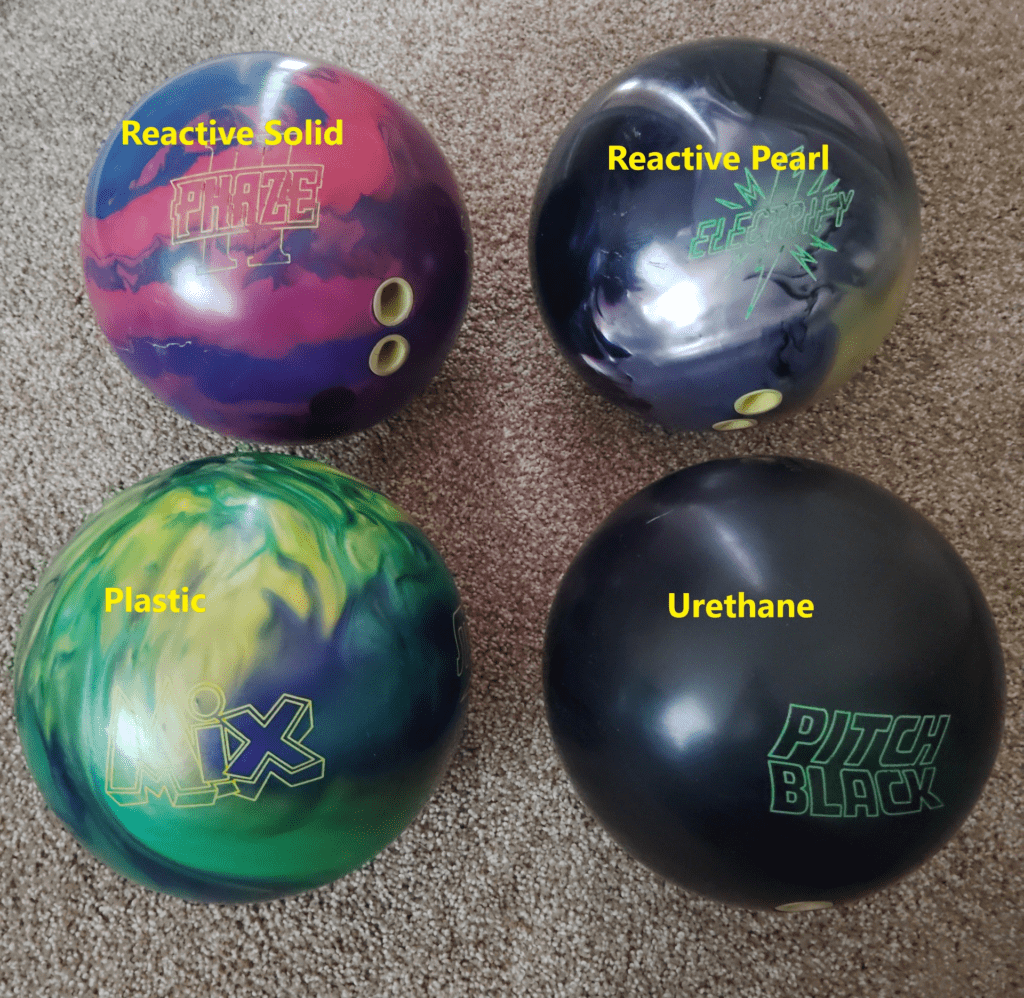
Plastic (Polyester)
Plastic coverstocks create the least friction of any bowling ball.
That’s why plastic balls go straighter and hook very little, even on dry lanes. They don’t absorb oil and they don’t “grab” the lane surface. Most bowlers use plastic balls for spare shooting, especially on corner pins.
What plastic does well:
- Minimizes hook
- Keeps the ball on line
- Takes lane conditions mostly out of the equation
When to use it:
- Shooting spares
- Extremely dry lanes
- Beginners learning to throw straight
Plastic isn’t designed to strike consistently, but it’s one of the most important balls in a bowler’s bag. I have an article you can read for more about picking up your spares and why it matters so much.
Urethane
Urethane sits between plastic and reactive resin in terms of friction.
Urethane balls create more traction than plastic but far less than modern reactive balls. They don’t absorb oil much, so they tend to read the lane early and roll smoothly without a sharp backend.
What urethane actually does:
- Reads the lane early
- Controls the breakpoint
- Smooths out wet/dry lane conditions
When to use it:
- Short oil patterns
- High friction lane surfaces
- When reactive balls are too jumpy
Urethane is about control, not power. Many high-level bowlers use it to keep the ball in play and manage overreaction.
Reactive Resin (Solid, Pearl, Hybrid)
Reactive resin bowling ball coverstocks are the most common strike balls today. The big difference between them and urethane is oil absorption. Reactive balls soak up oil, which creates more friction and more hook.
The three main types of reactive resin all do this differently.
Solid Reactive
Solid reactive coverstocks create the most friction of the reactive group.
They read the lane earlier and handle heavier oil better than pearls or hybrids. Because they slow down sooner, they tend to have a smoother, more predictable motion.
What solids do best:
- Handle medium to heavy oil
- Create an earlier roll
- Control the midlane
When to use them:
- Fresh oil
- Sport patterns
- When you need the ball to slow down earlier
Solid reactives are often the first ball out of the bag.
Pearl Reactive
Pearl reactives are designed to get through the front part of the lane more easily.
They create less friction early, save more energy, and respond faster when they hit friction downlane. This is where the sharper backend motion comes from.
What pearls do best:
- Push through the fronts
- Create a stronger backend move
- Match up on medium to lighter oil
When to use them:
- Transitioned lanes
- Broken-down house shots
- When solid balls start hooking too early
Pearls aren’t “stronger” than solids. They’re just cleaner through the front.
Hybrid Reactive
Hybrids combine solid and pearl materials in the same coverstock.
The goal is balance. Hybrids try to give you some midlane read from the solid portion and some backend motion from the pearl portion.
What hybrids do best:
- Blend lane conditions
- Handle moderate transition
- Offer versatility
When to use them:
- When solids are too early and pearls are too long
- Medium oil conditions
- As a benchmark-style ball for many bowlers
Hybrids are often great all-purpose options.
Surface Matters More Than the Name
One of the most misunderstood things about coverstocks is surface.
A solid ball with polish can go longer than a dull pearl. A pearl with 1000 grit can hook earlier than expected. The coverstock type matters, but surface preparation matters just as much, if not more.
As a coach, I always remind bowlers:
- Surface controls when the ball hooks
- Core controls how it continues through the pins
Final Thoughts
Coverstocks aren’t magic. They don’t fix bad shots or poor alignment. What they do is change how the ball interacts with the lane.
If you understand what each coverstock type actually does, you’ll make better ball choices, smarter adjustments, and score more consistently.
And that’s the real goal.