
Why Your First Tournament Feels Different
Bowling your first tournament almost always feels different than league bowling — and that’s completely normal. Even if you’ve bowled well in league for years, tournaments tend to feel more serious the moment you walk into the building.
There’s usually a new center, a different pace of play, and more people you don’t know. Add in prize money, brackets, or just the fact that it “counts,” and the pressure can sneak up on you quickly.
The goal of this article isn’t to overwhelm you with advanced strategy. It’s to help you understand what to expect, calm the mental side of the game, and put yourself in a position to bowl your best.
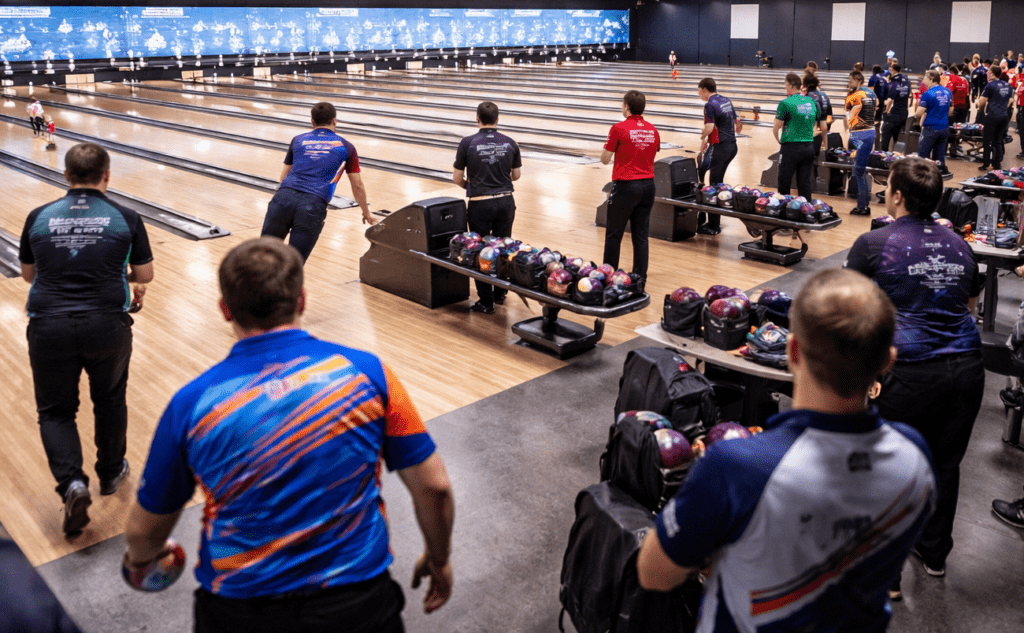
What to Expect Mentally (and Why That Matters)
If this is bowling your first tournament, expect nerves. Shaky legs, a faster heart rate, or feeling like you’re rushing shots are all common, especially in the first game.
The key is not turning it into something bigger than it needs to be. You’re not trying out for Team USA — you’re bowling. Treat it like league bowling with a slightly faster pace of play. Be ready to go when it’s your turn.
One of the most important things you can do is stick to your pre-shot routine no matter what’s happening around you. The routine you use in league is the same routine you should use in competition. That familiarity is what settles your body and mind.
If you have the option, bowling with friends can help a lot too. Familiar faces keep the environment from feeling overwhelming and make it easier to stay relaxed and focused on your own game.
Coaching reminder: nerves mean you care. Don’t fight them. Acknowledge them, breathe, and trust that they will settle once you get a few frames in.
Before the Tournament Even Starts
Bowl at the Center Ahead of Time (If You Can)
If possible, try to bowl at the tournament center a day or two before the event. This isn’t about cracking the lane pattern or figuring everything out ahead of time — it’s about familiarity.
Seeing the building, the approaches, the lighting, and the general layout gives you a mental picture of where you’ll be on tournament day. When you walk in already knowing what the place looks like, your brain has one less thing to process, and that alone can help calm nerves.
Don’t overanalyze what you see. The lanes will almost certainly play differently during the tournament. The value here is comfort and orientation, not lane-play strategy.
Get There Early
Showing up early is one of the easiest ways to lower stress, especially when bowling your first tournament.
Getting there with extra time lets you:
- Check in without feeling rushed
- Find your pair and get settled
- Take care of anything unexpected before practice starts
It’s also a great opportunity to talk with the tournament director. If you’re unsure about the format, scoring, re-oils, or lane moves, ask. That’s what they’re there for, and it’s better to get clarity early than wonder mid-tournament.
This is also when you can ask about brackets and side pots if you’re interested. If you’re new, don’t feel pressured to jump into everything right away — just make sure you understand what you’re entering.
(Side note: I’ll be breaking down brackets, side pots, and common tournament formats in a separate post for anyone who wants a clearer explanation.)
Equipment: Bring What You’re Comfortable With
When it comes to equipment, there’s no “correct” number of bowling balls to bring to a tournament. The right answer is whatever you can reasonably manage and feel confident using.
In longer tournaments, the lanes will transition. Oil breaks down, carry changes, and what worked early may not work later. Having more options can help you stay lined up as conditions change — but only if you actually know how to use them.
If you only have one or two balls, that’s completely fine. Plenty of bowlers compete and cash with a small arsenal. The key is understanding how to make adjustments with what you have. That might mean moving your feet, adjusting your target, or changing ball speed instead of switching equipment.
One important thing to remember: don’t feel pressured by what other bowlers bring. You’ll see people with six-ball totes, backpacks, rollers, and everything in between. That doesn’t mean you need to match them to be competitive.
Personal note from a coaching perspective: I bring six balls to tournaments so I’m prepared for different transitions — not because everyone needs to. Confidence and good decision-making matter far more than the number of balls you carry in the door.
Warm-Up Is NOT Practice
By the time you enter a tournament, you should already know how to bowl. Bowling your first tournament is not the time to rebuild your swing, change your release, or experiment with brand-new ideas.
Warm-up has a very specific purpose, and it’s much simpler than most people make it.
Warm-up is for:
- Getting your body loose
- Finding the pocket
- Confirming ball speed and timing
- Shooting a couple of spares to get your eyes right
That’s it.
A very common mistake, especially for first-time tournament bowlers, is trying to do too much. Throwing different balls every shot, playing wildly different lines, or chasing the “perfect look” often leads to confusion before game one even starts.
This is my opinion as a coach: most first-timers hurt themselves by experimenting too much during warm-up. Instead of building confidence, they create doubt. When the first frame of game one arrives, they’re unsure which ball or line to trust.
Use warm-up to confirm what you already do well. Simple, repeatable shots beat overthinking every time — especially early in a tournament.
Tournament Pace Is faster (Sometimes) — Manage Your Energy
Tournament bowling often moves at a different pace than league. Games are typically quicker, there may be delays between pairs, and you might feel more rushed in-betwen shots than you’re used to.
Expect that pace. It doesn’t mean something is wrong.
One simple but overlooked tip: sit when you’re not up. Standing on a bowling floor for four hours wears you down faster than you realize. Save your legs and your focus for when it’s actually your turn to bowl.
Managing your energy also means taking care of your body. Bring water and light, familiar snacks. Long tournaments are as much about staying steady as they are about striking, and running out of gas halfway through makes everything harder.
Make Simple Adjustments — Don’t Panic
Before the tournament even starts, it helps to have a basic adjustment plan in mind. Not a complicated flowchart — just simple, repeatable moves you already trust.
For example:
- If you’re going high → move left
- If you’re going light → move right
- If carry starts to go away → stay patient and focus on hitting the pocket
Having this in your head ahead of time keeps you from panicking when something doesn’t look perfect.
What you don’t need to do is reinvent your game mid-block. Changing ball speed dramatically, forcing hook, or abandoning your normal look after one bad shot usually creates bigger problems than it solves.
Tournaments reward bowlers who make calm, simple adjustments and stay committed. Small moves made confidently are almost always better than big guesses made out of frustration.
For more on adjustments, you can check out Understanding Lane Play.
Spares Win Tournaments
Strikes are great, but spares are what keep you in contention over multiple games. In most tournaments, missing makeable spares is the difference between cashing and watching from the sidelines.
You don’t need to strike every frame to compete — but you do need to clean up what’s in front of you.
Commit to your spare system and trust it under pressure. Whether you throw plastic, flatten your hand, or use a specific ball for spares, consistency matters more than style.
Pressure tends to expose weak spare shooting. When lanes get tougher or carry goes away, bowlers who fill frames separate themselves quickly. Making your spares keeps momentum on your side and gives you room to miss occasionally without falling behind.
I have a page about picking up spares and how they really raise your average.
Don’t Sweat One Bad Shot (Especially in Longer Tournaments)
In longer tournaments — especially 6 to 8 game events — one bad shot or even one bad frame doesn’t ruin anything.
Everyone misses. Everyone. Even the bowlers who end up winning the tournament have shots they want back.
The mistake is letting one miss turn into two or three. Instead of trying to “fix” the last shot, shift your focus forward. Your only job is to make the next shot a good one.
Short memory matters in tournament bowling. The faster you move on, the better your chances of staying competitive deep into the block.
Ignore the Scoreboard Until the End
Scoreboards can be misleading, especially when bowling your first tournament.
You don’t know anyone else’s handicap, and you don’t know how the field will finish. A 240 scratch game and a 210 game with 30 pins of handicap are the same thing — even though they look that different on the board.
Early hot starts don’t guarantee strong finishes. Lanes change, pressure builds, and consistency matters more as the tournament goes on.
Rankings only matter when the tournament is over. Until then, keep your attention where it belongs.
Coaching reminder: bowl your frame, your pair, your game.
Final Coaching Advice for Your First Tournament
Be patient. Tournament bowling is a long game.
Control what you can control: your speed, your target, your routine, and your spare shooting. Let everything else take care of itself.
Tournaments reward consistency, not perfection. You don’t need your best game every frame — you need a steady, repeatable approach over time.
And finally, if you learned something — about lane play, pressure, or your own mental game — it was a successful first tournament. Results matter, but experience is what actually makes you better the next time out.