Introduction
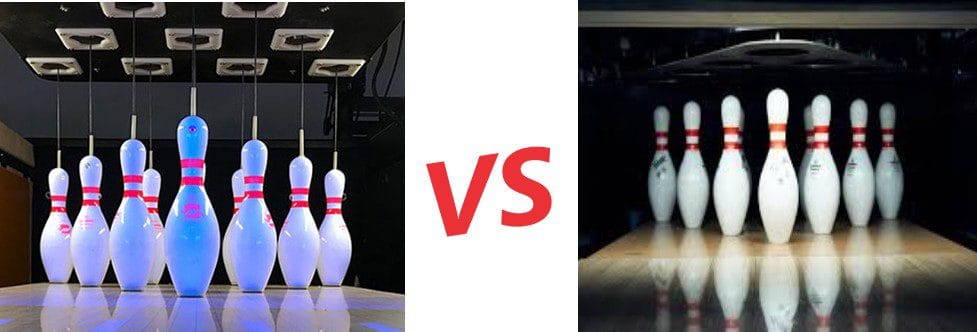
When it comes to bowling, not all pins are created equal. Most bowlers are familiar with the classic free-fall pins, sometimes called “regular” pins. Just recently there’s another type you may encounter in some centers: string pins. As the name suggests, these pins are attached to strings, which changes how they move, reset, and interact with each other on the lane.
In this post, we’ll take a close look at string pins versus regular pins, comparing how they behave, the pros and cons for both bowlers and bowling centers, and what the player experience feels like. The goal isn’t to say one is better than the other — it’s to give you the information so you can understand the differences and decide for yourself.
Pin Action & Gameplay Differences
One of the most noticeable differences between string pins and regular pins is how they react on the lane.
Regular pins (free-fall) are known for their dramatic action. When you hit the pocket, pins can scatter in multiple directions, creating more messengers and secondary pin action. That “blow up” effect is visually satisfying for many bowlers and is part of what makes striking so exciting.
String pins, on the other hand, behave a bit differently. Because each pin is attached to a string, there are fewer traditional messengers and less classic pin chaos. That said, string pins can still introduce some randomness — the strings can twist, drag pins slightly, or occasionally cause an unexpected knockdown. Another key difference is how they reset: second-frame pins are placed in the exact same position every time, eliminating the slight variations you might see with free-fall pins after a ball slightly nudges them out of place.
Understanding these differences can help bowlers anticipate how their shots will behave and adjust their expectations when playing on string pins versus regular pins.
Psychological Considerations
Player perceptions of string pins versus regular pins can vary, especially among more experienced bowlers. Some bowlers may feel that a shot “should have struck” on string pins, even if the ball hit the pocket in the same way it would have on free-fall pins.
This often comes down to confirmation bias — pre-existing opinions or expectations influence how players interpret what they see on the lane. For example, a bowler who doesn’t fully trust string pins may focus on an occasional pin that twists or drags instead of recognizing the good breaks they get from the same system. Conversely, an opponent’s “lucky” pin drop happens with both pin types, but perception tends to differ depending on the system.
The net effect is that player perceptions are shaped more by experience and expectations than by actual scoring differences. Understanding this can help bowlers approach string pins and regular pins with a clearer, more objective perspective.
Competitive vs. Recreational Bowling
The impact of string pins versus regular pins can vary depending on the level of play.
For recreational or casual leagues, string pins are generally acceptable. Most bowlers won’t notice or be concerned with the minor differences in pin action, and the game plays much the same as it does with free-fall pins.
In sport or high-level competition, free-fall pins are still preferred. Bowlers at this level rely on visual feedback, consistent pin behavior, and the traditional carry patterns that free-fall pins provide. While some string pins are USBC certified for tournament play, adoption has been slower, largely due to familiarity and trust built over years of playing with regular pins.
This distinction helps explain why string pins can work well in casual settings while free-fall pins remain the standard in competitive environments.
Practical Considerations for Bowling Centers
For bowling centers, the choice between string pins and regular pins often comes down to cost, maintenance, and reliability.
String pins are generally cheaper to install and maintain. Because they are less prone to mechanical issues and lane breakdowns, they help keep lanes running with fewer interruptions. This can increase uptime for leagues and open play, and in some cases, it may even make it feasible for new centers to open or for older centers to remain in business.
Free-fall pins, while iconic in both look and sound, come with higher maintenance costs. Mechanical failures are more common, and downtime can affect league schedules and casual play. However, many bowlers find the visual impact and satisfying “blow up” of regular pins an important part of the bowling experience.
Understanding these practical considerations can help both bowling center owners and bowlers appreciate why different pin systems exist and how they affect the game beyond just playability.
Pros & Cons Summary
To make the differences between string pins and free-fall pins easier to digest, here’s a quick comparison of the main features:
| Feature | String Pins | Free-Fall Pins |
|---|---|---|
| Messengers / secondary action | Less | More |
| Pin reset consistency | Exact | May shift |
| Maintenance cost | Low | High |
| Visual / auditory experience | Less dramatic | Dramatic / satisfying |
| Suitability | Recreational / casual leagues | Competitive / traditional play |
This summary highlights the trade-offs of each pin type, helping bowlers and bowling centers quickly see what matters most depending on their priorities and level of play.
Conclusion
Both string pins and regular pins have their strengths and trade-offs. String pins offer lower maintenance costs, consistent resets, and can help bowling centers stay open or even expand. Conversely regular pins provide the iconic visual and auditory experience that many bowlers love.
There’s no single “right” choice — the best option depends on the priorities of the bowling center and the preferences of the players. Recreational bowlers may find string pins perfectly fine, while competitive players often prefer the feedback and traditional action of free-fall pins.
Bowling has evolved over the years in many ways. Wood lanes gave way to synthetic surfaces. Oiling went from hand-applied sprays to precise machines, and bowling balls have changed dramatically in materials and design. With each new development, some players have had to adjust. String pins are simply the latest step in the sport’s ongoing evolution.
Ultimately, the best way to form an opinion is to try both types of pins and see how each affects your game. Understanding the differences allows you to appreciate what each system brings to the lane and enjoy bowling no matter which pins are in play.