What This Adjustment Is (Plain English)
“Taking hand out of the ball” simply means reducing how much you rotate around the ball at release.
Instead of trying to create hook, you’re letting the ball roll more naturally off your hand.
In real terms, this usually shows up as:
- Less axis rotation
- A more relaxed release
- Letting the ball come off your hand instead of around it
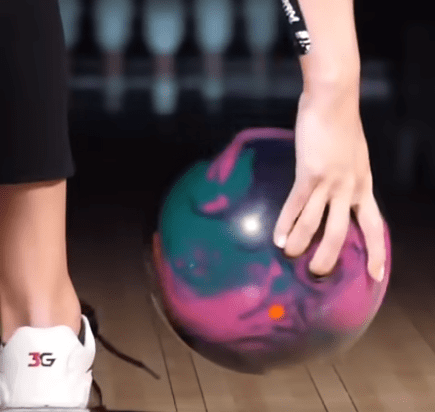
You’re not trying to spin it less on purpose — you’re trying to stop adding extra manipulation.
This is of course about the exact opposite adjustment as: Giving the Ball More Hand
What Problem It’s Meant to Solve
This adjustment is mostly about control and predictability.
It’s especially useful when:
- The ball is overreacting downlane
- Misses left turn into big trouble
- The reaction looks great one shot… and awful the next
If you feel like you’re constantly guessing what the ball will do, you’re probably using more hand than the lane condition wants.
What It Changes in Ball Motion
Taking hand out of the ball changes how the ball uses its energy.
You’ll typically see:
- Earlier roll in the midlane
- A smoother, more rounded backend
- Less sideways motion off the spot
Instead of a sharp move that relies on friction, the ball blends the pattern better and reads the lane sooner.
That smoother shape is what gives you margin for error — especially on tougher conditions.
When This Adjustment Works Best
This adjustment shines when the lane is punishing sideways motion.
Common examples:
- Shorter patterns, where friction is early and strong
- Cliffed house shots, where misses right hook too much and misses left never recover
- Late in a block, when fronts are going but backend is still touchy
Anytime you think “this ball is just too jumpy”, less hand is a good place to start.
When It Usually Makes Things Worse
Less hand isn’t a magic fix — and in the wrong situation, it can cost you strikes.
It tends to struggle when:
- There’s carrydown, and the ball already struggles to finish
- Entry angle is low and you need more continuation
- The ball is burning up too early
If the ball starts rolling out and hitting flat, you may have taken too much hand out — or chosen the wrong adjustment altogether.
Common Mistakes Bowlers Make
This is where a lot of bowlers go wrong.
Dumping the ball
Less hand doesn’t mean dropping it at the bottom. That kills energy and usually leads to weak hits.
Slowing the ball way down
Many bowlers accidentally reduce speed when they focus on hand position. Speed control still matters.
Forcing a “straight” release
Trying to stay perfectly behind the ball can create tension. The goal is less manipulation, not stiffness.
How to Try It (Simple, Practical Cues)
Instead of thinking mechanics, use feel-based cues:
- “Let the ball fall off my hand”
- “Roll it, don’t spin it”
- “Soft fingers, firm swing”
A great checkpoint:
If the release feels easier, you’re probably doing it right.
If it feels forced or awkward, you’re likely overthinking it.
How to Do It Without Losing Carry
This is the big fear — and it’s valid.
To keep carry:
- Maintain your normal ball speed
- Stay committed to hitting the pocket
- Let the ball roll through the pins, not deflect
Good carry comes from energy at impact, not just angle. A smoother shape with the right timing often carries better than a flippy one.
When to Abandon It and Try Something Else
If you see:
- Flat corners
- Weak 10s or 7s piling up
- The ball rolling out before it reaches the pins
…it’s time to move on.
At that point, a better option might be:
- Ball change to something cleaner
- Moving your feet and eyes
- Adjusting speed instead of hand
Less hand is a powerful adjustment — but only when it matches what the lane is asking for.